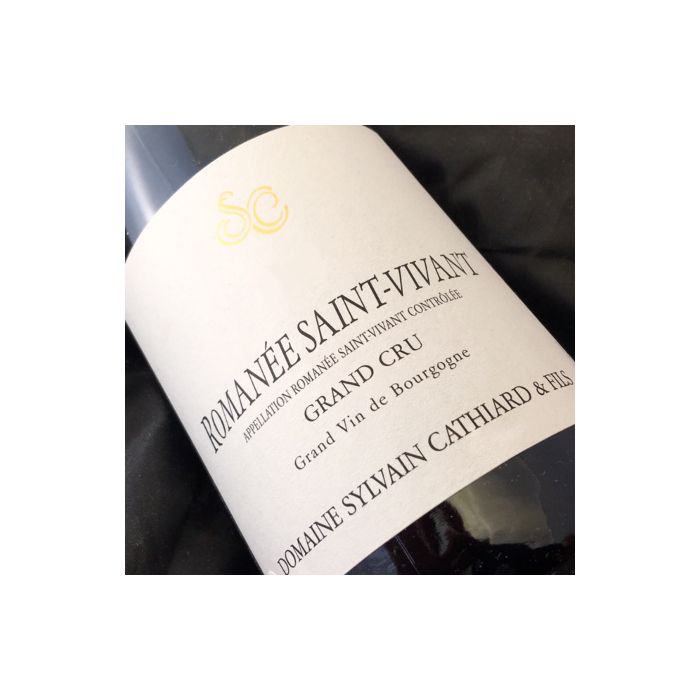
Romanée-Saint-Vivant is a physically demarcated climat of Vosne-Romanée corresponding to a Grand Cru appellation reserved for red wines. Located on a gentle piedmont plateau overlooking the village, between 247 and 260 meters, it slopes gently eastward. Its shallow, clayey, carbonate-rich soils with high iron oxide content cover a well-draining limestone subsoil, with a conglomeratic formation in its eastern part.
- Vineyard commune
- Vosne-Romanée
- Origin of the vineyard name
- The name "Romanée de Saint-Vivant" is recorded in 1765. "Romanée" was borrowed from a small neighboring parcel, while "Saint-Vivant" recalls the Cluniac monastery that historically owned the vineyard.
- Exposure
- eastward
- Altitude
- 247–260 m
- Slope
- gentle slope on a slight plateau
- Soil
- Slightly developed, carbonated, and shallow soils, heavily clayey, rich in iron oxides; colluvium of scree, clays, and silts.
- Subsoil and geology
- Bajocian entroquitic limestones; to the east, a conglomerate of limestone blocks in a salmon-pink marly matrix.
Le domaine dans cette parcelle
- Estate holding in the vineyard (ha)
- 0.167000 ha
- Year the vineyard was acquired
- 1984
- Vineyard holding status
- Owner; plot previously farmed under a sharecropping arrangement (métayage) by the Cathiard family
- Indicative vine age
- Plot indicated as planted in 1919 by a recent professional source.
Histoire de la parcelle
The Cluniac monastery of Saint-Vivant owned a wine estate in Vosne as early as the Middle Ages, consisting of clos precisely listed in 1512. The current climat brings together the former Cloux des Neuf Journaux, des Quatre Journaux, and du Moytant. Confiscated as ecclesiastical property during the French Revolution, it was acquired by the Marey-Monge family, who kept it until 1898 before it was partially divided. Already placed in the top categories of the 1816, 1855, and 1860 classifications, Romanée-Saint-Vivant was recognized as an appellation d'origine contrôlée on September 11, 1936.