


Domain Rene Engel Echezeaux 1999
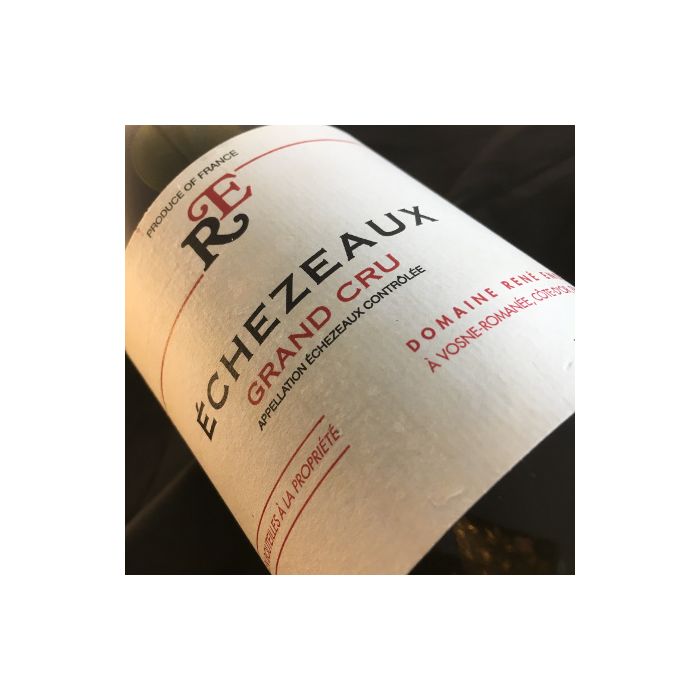
The 1999 Domaine René Engel Échezeaux is a red Burgundy wine from the Échezeaux climat, classified as a Grand Cru. Produced in Vosne-Romanée by Domaine René Engel, it is crafted from 100% Pinot Noir. The Wine Advocate awarded it 92/100 and recommends drinking it between 2016 and 2026. The publication describes a dense and powerful wine, driven by black and red fruits, a firm tannic structure, earthy nuances, and a persistent finish with hints of white pepper.
La bouteille proposée
- Size
- Bottle (75cl)
- Packaging
- Loose
- Label Condition
- Perfect
- Fill Level
- Perfect
- Capsule Condition
- Perfect
Identité du vin
- Couleur
- Red
- Pays
- France
- Région
- Bourgogne
- Appellation
- Vosne Romanée
- Producteur / Domaine
- Domaine René Engel
- Parcelle / Cru
- Échezeaux (Vosne Romanée)
- Millésime
- 1999
Cépage et assemblage
- Grape Variety
- 100% Pinot Noir
Domaine René Engel
Domaine René Engel was a family-run estate based in Vosne-Romanée, in the Côte de Nuits, whose vineyards included plots in Vosne-Romanée, Aux Brûlées, Échezeaux, Grands-Échezeaux and Clos de Vougeot. Following the death of Philippe Engel in 2005 – the last vintage bearing the estate’s name being the 2004 – the vineyards were acquired by the Pinault family in July 2006 and incorporated into the Domaine d’Eugénie. Domaine René Engel therefore no longer exists as an independent wine-producing estate.
Histoire du domaine
The estate was named after René Engel, a winegrower from Vosne-Romanée born in 1894, who studied at the Beaune School of Viticulture before developing the family estate. René Engel was also a professor of oenology for thirty-five years and helped found the Confrérie des Chevaliers du Tastevin. In 1949, he handed over the management of the estate to his son, Pierre Engel. Pierre Engel, who served as mayor of Vosne-Romanée from 1959 to 1971, fell ill during the 1970s and died in 1981. His son, Philippe Engel, then took over the estate with his mother at the age of 26. From 1988 onwards, the entire production was bottled at the estate, whereas previously a significant proportion had been sold to wine merchants. Philippe Engel ran the estate until his untimely death in 2005; the 2004 vintage was the last to be marketed under the name Domaine René Engel. In July 2006, the Pinault family acquired the estate and founded Domaine d’Eugénie on these vineyards. The successor estate is now managed by Jaeok Chu Cramette, but this role should not be attributed retrospectively to Domaine René Engel.
Échezeaux (Vosne Romanée)
Échezeaux is a Grand Cru appellation physically delimited within the Côte de Nuits, located entirely within the commune of Flagey-Echézeaux, between Clos de Vougeot and the Premiers Crus of Vosne-Romanée. It brings together eleven climats and features more diverse topography and soils than the neighboring Grands-Echezeaux Grand Cru. The vineyard ranges in altitude from 230 meters to just over 300 meters, with a slope reaching 13% mid-slope. Bajocian marls, locally covered with scree, gravel, red alluvium, and yellowish marls, form a complex mosaic.
- Vineyard commune
- Flagey-Echézeaux
- Origin of the vineyard name
- The name refers to the former "Chezeaux", originating from Late Latin casa, casale or casalis, designating dwelling sites or a group of homes, likely a former hamlet.
- Exposure
- East-facing
- Altitude
- 230 m
- Slope
- Up to 13% mid-slope
- Soil
- Stony covers, gravel, red alluvium, and yellowish marls; soils 70 to 80 cm deep upslope.
- Subsoil and geology
- Jurassic complex dominated by Bajocian marls.
Le domaine dans cette parcelle
- Estate holding in the vineyard (ha)
- 0.550000 ha
- Vineyard holding status
- Owned by the estate until its sale in 2006
- Indicative vine age
- Vines of mixed ages; some approached 80 years when Philippe Engel managed the estate.
Histoire de la parcelle
The winegrowing development of Échezeaux is associated with the monks of the Abbey of Cîteaux in the 12th and 13th centuries, within the same historical complex as Clos de Vougeot. The Échezeaux Appellation d'Origine Contrôlée was recognized by the decree of July 31, 1937, published on August 11, 1937.