




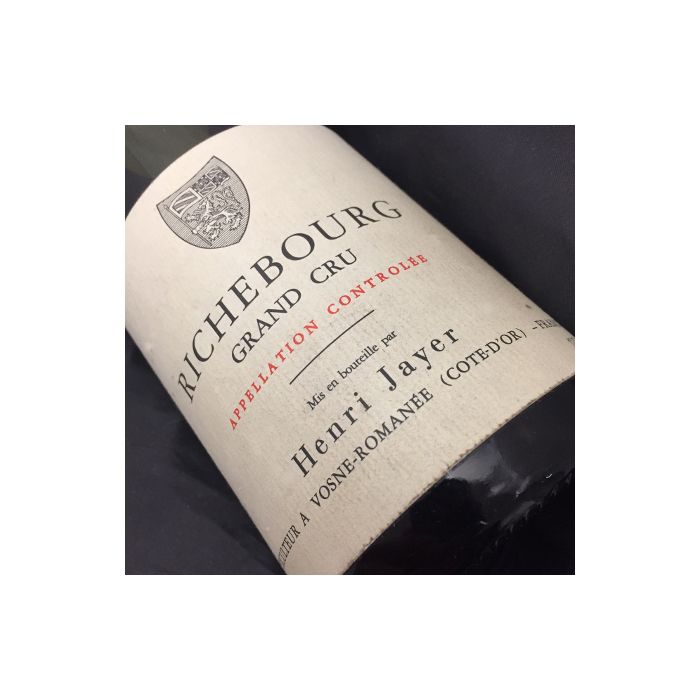
Domain Henri Jayer Richebourg 1978
The 1978 Domaine Henri Jayer Richebourg is a red Burgundy wine from the Richebourg Grand Cru climat in Vosne-Romanée. Crafted exclusively from Pinot Noir, it hails from a Burgundian vintage marked by an autumn favorable for harvesting following a more erratic summer season. Richebourg wines are traditionally renowned for their structure, ample texture, and spicy finish—characteristics particularly well-suited to the longevity of the great Pinot Noirs of the Côte de Nuits.
Identité du vin
- Couleur
- Red
- Pays
- France
- Région
- Bourgogne
- Appellation
- Vosne Romanée
- Producteur / Domaine
- Domaine Henri Jayer
- Parcelle / Cru
- Richebourg
Cépage et assemblage
- Grape Variety
- 100% Pinot Noir
Domaine Henri Jayer
Henri Jayer refers to the Vosne-Romanée winemaker Henri Jayer (1922–2006) and the wines he produced in Burgundy. His estate no longer exists as an independent wine-producing estate: the vineyards were gradually handed over to his nephew Emmanuel Rouget, whilst Cros-Parantoux is now run by Emmanuel Rouget and, in part, by the Méo-Camuzet estate.
Histoire du domaine
Born in Vosne-Romanée in 1922, Henri Jayer took over the family estate in 1939, at the age of 16, when his brothers were called up for military service. He then went on to study oenology in Dijon. His estate initially covered 3.5 hectares spread across Vosne-Romanée, Nuits-Saint-Georges and Échézeaux. After the war, he also worked as a sharecropper on vineyards that did not belong to him. In 1950, he entered into a sharecropping agreement with Maria Noirot-Camuzet for Cros-Parantoux, a plot of land in Vosne-Romanée that was then lying fallow, almost all of which he subsequently acquired. He began bottling some of his wines under his own name in 1959. Having initially blended Cros-Parantoux into his Vosne-Romanée village wine, he began vinifying it separately from 1978 onwards. His winemaking practices were based in particular on careful soil management, moderate yields, the complete destemming of the harvest and the use of new oak barrels. Emmanuel Rouget, his nephew, began working with him in 1976 and gradually took over the estate; by 2001, all of Henri Jayer’s vineyards were under his control. Henri Jayer died in Dijon on 20 September 2006. Two-thirds of Cros-Parantoux now belong to Henri Jayer’s two daughters and are managed by Emmanuel Rouget; the remainder is managed by the Méo-Camuzet estate.
Richebourg
Richebourg is both a Grand Cru appellation and a physically delimited climat of Vosne-Romanée, consisting of the lieux-dits Les Richebourgs and Les Véroilles ou Richebourgs. It occupies the foothills of the slope between 260 and 290 meters, on a gentle slope facing east. Its shallow, clayey, carbonate-rich soils with high iron oxide content rest on Bajocian marls and soft limestones, beneath a colluvial cover blending scree, clays, and silts.
- Vineyard commune
- Vosne-Romanée
- Exposure
- facing east
- Altitude
- 260–290 m
- Slope
- gentle to slight slope
- Soil
- Sparsely developed, carbonate-rich, shallow and heavily clayey soils, rich in iron oxides; colluvium of scree, clays, and silts.
- Subsoil and geology
- Bajocian calcareous marls and soft, frost-susceptible limestones, resting on the Jurassic limestone series of the Côte de Nuits.
Le domaine dans cette parcelle
- Vineyard holding status
- Sharecropping agreement (métayage) with the Méo-Camuzet family, ended after the 1987 vintage
- Indicative vine age
- Richebourg parcel replanted in the 1950s under the guidance of Henri Jayer.
Histoire de la parcelle
The name Richebourg is attested as early as 1512. The Abbey of Cîteaux owned vines on the site, probably since the 17th century, and contributed to its renown. Recognized among the finest crus in the classifications of the 18th and 19th centuries, Richebourg was extended in 1924 to include Les Véroilles sous Richebourg following an agreement between owners ratified by the Court of Appeal of Dijon. The appellation d'origine contrôlée was recognized on September 11, 1936, with the boundaries defined in 1924.


