




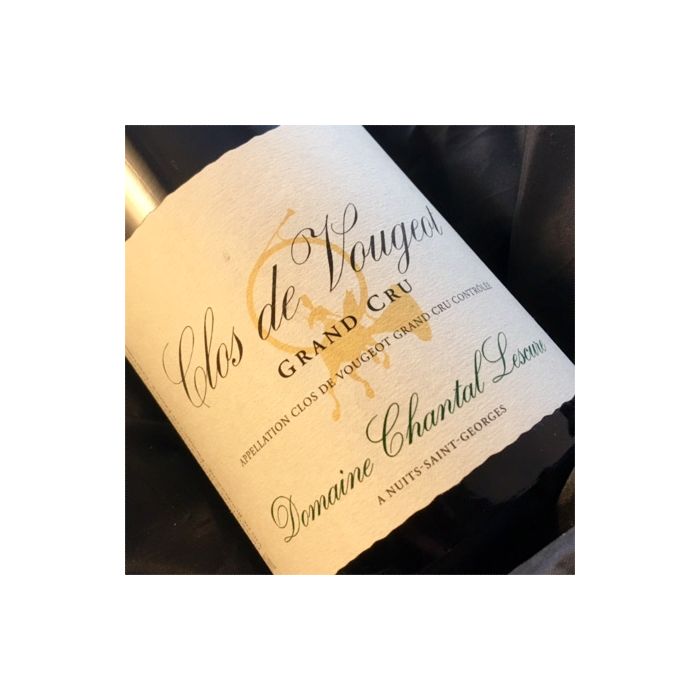
Domain Chantal Lescure Clos Vougeot 2016 Bottle (75cl)
The 2016 Domaine Chantal Lescure Clos Vougeot is a red Burgundy Grand Cru from the Clos de Vougeot in Vougeot. Made exclusively from Pinot Noir, it comes from the Montiotes Hautes lieu-dit, on a 30-are parcel with stony clay-limestone soils. The estate has farmed its vineyards organically since 2009. The grapes are hand-harvested, destemmed, and then vinified in wooden vats using native yeasts. Ageing on the lees takes about 16 to 18 months in a cool cellar, with up to 100% new oak barrels used for this cuvée.
La bouteille proposée
- Size
- Bottle (75cl)
- Packaging
- Loose
- Label Condition
- Perfect
- Fill Level
- Perfect
- Capsule Condition
- Perfect
Identité du vin
- Couleur
- Red
- Pays
- France
- Région
- Bourgogne
- Appellation
- Vougeot
- Producteur / Domaine
- Domaine Chantal Lescure
- Parcelle / Cru
- Clos de Vougeot
- Millésime
- 2016
Cépage et assemblage
- Grape Variety
- 100% Pinot Noir
Domaine Chantal Lescure
Based in Nuits-Saint-Georges, Domaine Chantal Lescure farms 19 hectares of vineyards spread between Meursault and Vougeot, consisting of approximately two-thirds Pinot Noir and one-third Chardonnay. Certified organic, the estate produces a parcel-specific range extending from regional appellations to Clos de Vougeot Grand Cru and Vosne-Romanée Premier Cru Les Suchots. Since the acquisition of the property by Jean-Philippe Girard and Éric Rousseau, the management of the estate and the winemaking are overseen by Fabrice Groussin.
- Owner
- Jean-Philippe Girard et Éric Rousseau
- Maître de chais
- Fabrice Groussin
- Surface (ha)
- 19.00 ha
Histoire du domaine
Domaine Chantal Lescure was founded in 1975 by Chantal Lescure and Xavier Machard de Gramont. Following the passing of Chantal Lescure in 1996, their sons Aymeric and Thibault Machard de Gramont took over the property and entrusted technical management to François Chavériat. Starting in 1997, the latter initiated a profound transformation in viticultural practices, notably through the abandonment of chemical products and the conversion of the entire vineyard to organic farming, achieving certification in 2006. In 2023, the family sold the estate to Burgundian entrepreneur Jean-Philippe Girard, in partnership with Éric Rousseau, a prominent figure from Domaine Armand Rousseau in Gevrey-Chambertin. François Chavériat continued his work until his retirement in 2024, whereupon Fabrice Groussin succeeded him as estate manager and head of winemaking.
Clos de Vougeot
The Clos de Vougeot is a vast, single-piece vineyard enclosure, surrounded by walls and located at the foot of the Côte de Nuits slope, in the commune of Vougeot. Its terroir varies markedly from top to bottom: thin, gravelly soils on Bajocian limestone in the upper part, more clayey brown soils on limestone debris in the middle, and deeper, clayey and silty soils on a marly layer in the lower part. The site simultaneously constitutes a physically demarcated Burgundian climat and the emblematic parcel area of the AOC Grand Cru Clos de Vougeot or Clos Vougeot.
- Vineyard commune
- Vougeot
- Origin of the vineyard name
- "Clos" designates the vineyard historically enclosed by walls; "Vougeot" takes up the name of the place, linked to the Vouge which marks a historical boundary of the estate.
- Altitude
- 240–265 m
- Slope
- gentle, average of about 3.8%
- Soil
- At the top, shallow, granular soils rich in gravel; in the middle, shallow, more clayey brown soils on limestone debris; at the bottom, deeper brown soils rich in clay and fine silt.
- Subsoil and geology
- Jurassic complex; Bajocian limestone slab in the upper part, limestone debris in the middle, and marly layer in the lower part, with the influence of superficial formations linked to the outlet of the combe d'Orveau.
Le domaine dans cette parcelle
- Estate holding in the vineyard (ha)
- 0.300000 ha
- Indicative vine age
- 30 ares: 15 ares of vines over 70 years old and 15 ares replanted in 2011.
Histoire de la parcelle
The wine estate was gradually established by the Cistercian abbey of Cîteaux starting from the early 12th century; a medieval agreement set boundaries that have remained almost unchanged, and the wall was built before the end of that century. The farm buildings were developed from the 12th to the 15th century, then complemented in 1551 by the Renaissance residence that became the château du Clos de Vougeot. The abbey kept the estate until the Revolution; the buildings and vineyards were confiscated and then sold as national property in 1791, subsequently leading to the fragmentation of the property. The appellation d'origine contrôlée Clos de Vougeot or Clos Vougeot was recognized by decree on July 31, 1937.


