


Champagne Dom Perignon P2 1998
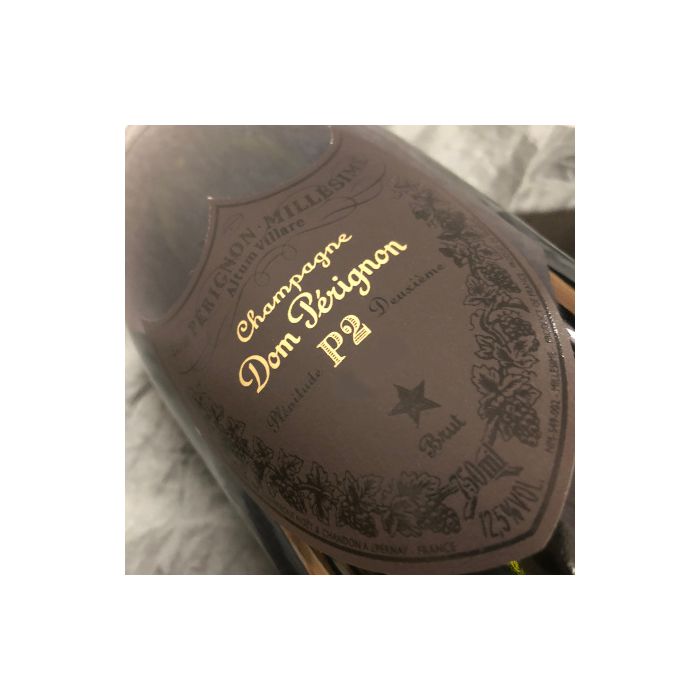
The 1998 Dom Pérignon P2, produced by Moët et Chandon in Champagne, is a Grand Cru effervescent white champagne made from Chardonnay and Pinot Noir. The P2 cuvée stands out here for its maturity and depth. James Suckling awards it 96/100, while The Wine Advocate rates it 91/100 and recommends drinking from 2018 to 2040. Critics describe a broad and complex wine, combining ripe fruits, notes of dried apple, brioche, and white truffle with a mineral, tangy freshness.
stock: 1
€612.00
€510.00
En stock
1 bouteille disponible
Une question ? Notre équipe vous conseille sur WhatsApp
+33 1 39 70 60 70
The bottle offered
- Size
- Bottle (75cl)
- Packaging
- Gift Box
- Label Condition
- Perfect
- Fill Level
- Perfect
- Capsule Condition
- Perfect
Wine details
- Couleur
- Sparkling White
- Pays
- France
- Région
- Champagne
- Producteur / Domaine
- Moët et Chandon
- Cuvée
- P2
- Millésime
- 1998
Cépage et assemblage
- Grape Variety
- Chardonnay, Pinot Noir
Moët et Chandon
Moët & Chandon is a Champagne house based in Épernay, founded in 1743 by Claude Moët. It owns 1,300 hectares of vineyards in Champagne, a significant proportion of which are classified as grands crus and premiers crus. The house is now owned by the LVMH Group, as part of Moët Hennessy Champagne Services (MHCS).
- Owner
- LVMH, via Moët Hennessy Champagne Services (MHCS)
- Maître de chais
- Benoît Gouez
- Surface (ha)
- 1300.00 ha
Histoire du domaine
Claude Moët founded his wine merchant’s business in Épernay in 1743. His grandson, Jean-Rémy Moët, subsequently developed overseas markets and contributed to the company’s international expansion. In 1816, Pierre-Gabriel Chandon de Briailles became his business partner. When Jean-Rémy Moët retired from the business in 1833, the company was passed on to his son Victor Moët-Romont and his son-in-law Pierre-Gabriel Chandon de Briailles. It then took the name Moët & Chandon. During the 19th century, the house significantly increased its shipments and commercial presence. It is now part of the LVMH group, within MHCS. Benoît Gouez has served as cellar master there since 2005.
P2
Dom Pérignon P2 is the second release of a Dom Pérignon vintage, aged for a longer period on the lees prior to disgorgement. Launched under this name in 2014 with the 1998 vintage, it replaced the previous category of releases formerly known as Œnothèque. It differs from the initial release of the same vintage by undergoing at least fifteen years of maturation aimed at achieving a new plenitude of expression.
- Origin of the cuvée name
- "P2" stands for "Plénitude 2", the second window of expression reached by a vintage of Dom Pérignon after extended aging on the lees.
- Cuvée creation year
- 2014
- Style of the cuvée
- A vintage Champagne with prolonged aging, seeking greater intensity, depth, complexity, and energy than during its first plenitude, while maintaining the quest for harmony characteristic of Dom Pérignon.
- Position within the range
- The second plenitude of Dom Pérignon vintages, positioned above their initial release and prior to the extremely rare Plénitude 3.
Histoire de la cuvée
The Plénitude program was launched in 2014 to formalize the various windows of expression observed during the aging of Dom Pérignon vintages. P2 succeeded the initial Œnothèque releases, with Dom Pérignon P2 1998 as the first commercialization under this name. The cuvée is crafted and marketed as an expression of Dom Pérignon, historically produced by Moët & Chandon and presented today by LVMH as a distinct Maison within Moët Hennessy.
Sell Your Wine Cellar
Vous possédez des bouteilles de Champagne Dom Perignon P2 1998
Vendez vos bouteilles au meilleur prix