




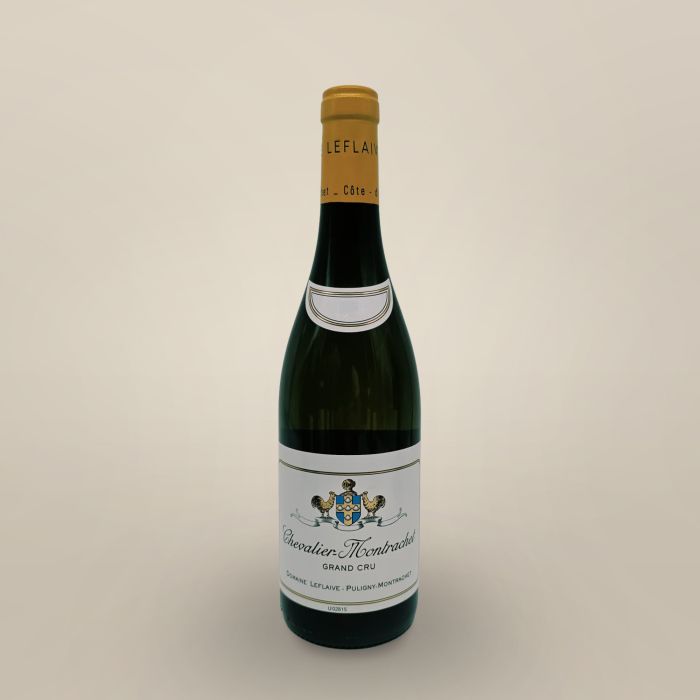
Domain Leflaive Chevalier Montrachet 1993
The 1993 Domaine Leflaive Chevalier-Montrachet Grand Cru is a white Burgundy wine from the Puligny-Montrachet appellation and the Chevalier-Montrachet parcel. Made from 100% Chardonnay, it holds the Burgundy Grand Cru classification. The Wine Advocate awards it 95/100, describing it as a classic Chevalier-Montrachet that is rich and incisive, with a deep, energetic, and concentrated palate that lingers on a persistent finish. Its recommended drinking window spans from 2010 to 2030.
Identité du vin
- Couleur
- White
- Pays
- France
- Région
- Bourgogne
- Appellation
- Puligny Montrachet
- Producteur / Domaine
- Domaine Leflaive
- Parcelle / Cru
- Chevalier-Montrachet
Cépage et assemblage
- Grape Variety
- 100% Chardonnay
Domaine Leflaive
Domaine Leflaive is a family-run estate based in Puligny-Montrachet, in the heart of the Côte de Beaune. It cultivates 24 hectares of Chardonnay, spread across the appellations of Puligny-Montrachet, Meursault, Chassagne-Montrachet and several grands crus. The estate is run by Brice de La Morandière, representing the fourth generation linked to the Leflaive family.
- Owner
- Famille Leflaive
- Maître de chais
- Amandine Brillanceau
- Surface (ha)
- 24.00 ha
- Production (average bottles per vintage)
- 120 000 bouteilles/an
Histoire du domaine
The Leflaive family has been based in Puligny-Montrachet since 1717 and at that time owned a few vineyards, the grapes from which were sold. The estate in its modern form was established by Joseph Leflaive (1870–1953), an engineer by training, who returned to manage the family estate following the phylloxera crisis. From 1920 onwards, he embarked on a programme of replanting, acquiring and developing the vineyards, with the support of his estate manager, François Virot. He gradually began marketing the wines under his own label, whilst the first bottles were exported to the United States between 1932 and 1939. Following his death in 1953, his children Jo, Jeanne, Anne and Vincent kept the estate together and established a civil partnership in 1973. Jo took charge of administration and finances, whilst Vincent oversaw the vineyard, the wines and their marketing. Olivier Leflaive became co-manager alongside Vincent in 1986, then Anne-Claude Leflaive joined the management team in 1990 before being appointed manager in 1994. Under her leadership, the estate gradually adopted biodynamic farming during the 1990s. Following her death in April 2015, her nephew Brice de La Morandière, the great-grandson of Joseph Leflaive, became managing partner. Since January 2025, Amandine Brillanceau has held the post of technical director; Louis Brière is cellar master at Puligny-Montrachet.
Chevalier-Montrachet
Chevalier-Montrachet is both a Grand Cru appellation and a physically delimited terroir in Puligny-Montrachet, reserved for white wines. It occupies an east- and southeast-facing slope in the heart of the hillside, between 260 and 300 meters in altitude according to the official specifications. Its lean, stony, well-draining, and low-fertility soils rest primarily on highly fragmented Bathonian limestone known as "calcaire de Chassagne"; a marly layer at the summit locally supports slightly richer soils. Historical shaping of the site is evidenced by ancient stone clearance, murgers (stone heaps), and dry-stone retaining walls.
- Vineyard commune
- Puligny-Montrachet
- Exposure
- East to southeast
- Altitude
- 260–300 m
- Soil
- Lean, very stony, well-draining, and low-fertility soils; slightly richer soils on the upper marly layer.
- Subsoil and geology
- Middle Jurassic formations, Bathonian stage; highly fragmented limestones, primarily "calcaire de Chassagne", with a small layer of marl at the summit.
Le domaine dans cette parcelle
- Estate holding in the vineyard (ha)
- 1.800000 ha
- Vineyard holding status
- Owner and grower
- Indicative vine age
- Plots planted in 1957, 1974, 1978 and 1980.
Histoire de la parcelle
The name Montrachet is documented as early as the 13th century in the form "Mont Rachaz"; the official heritage source interprets it as a "bald mount" (mont pelé), in reference to its stunted vegetation. In the 18th century, the wines of the Chevalier climat were still frequently assimilated with those of Montrachet, although Courtépée already distinguished true Montrachet, Chevalier, and Bâtard. A 1921 court ruling reserved the name Montrachet to Vrai Montrachet while acknowledging the customary use of Chevalier-Montrachet. The Chevalier-Montrachet AOC was recognized in 1937, and its vineyard area was subsequently adjusted in 1939 through the integration of plots from the neighboring lieu-dit Le Cailleret; the current delimitation was approved by the INAO in September 1989.


