




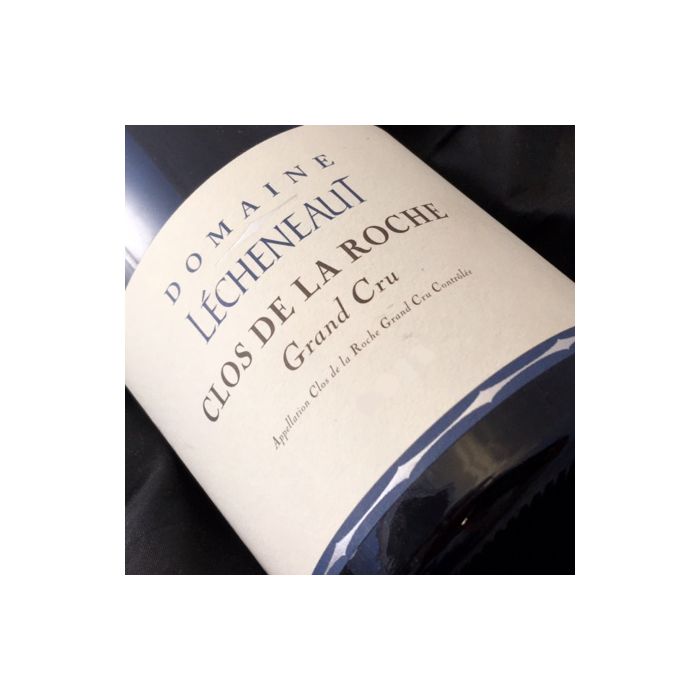
Domain Lecheneaut Clos de la Roche 2011
The 2011 Domaine Lecheneaut Clos de la Roche is a red Burgundy wine from the Clos-de-la-Roche grand cru in the Morey-Saint-Denis appellation. Made exclusively from Pinot Noir, it received 88/100 from The Wine Advocate, which recommends drinking it from 2013 to 2018. The publication describes a bouquet of wild dark fruits and dried violet, carried by a medium-bodied palate and precise acidity; the finish is marked by oak aging.
Identité du vin
- Couleur
- Red
- Pays
- France
- Région
- Bourgogne
- Appellation
- Morey Saint Denis
- Producteur / Domaine
- Domaine Lecheneaut
- Parcelle / Cru
- Clos-de-la-Roche
Cépage et assemblage
- Grape Variety
- 100% Pinot Noir
Domaine Lecheneaut
Domaine Lécheneaut is a family-run estate based in Nuits-Saint-Georges, in the Côte de Nuits. It cultivates around 12 hectares of vines spread across some twenty Burgundian appellations. The estate is currently run by Vincent Lécheneaut and his son Jules.
- Owner
- Vincent Lécheneaut et Jules Lécheneaut
- Surface (ha)
- 12.00 ha
- Production (average bottles per vintage)
- 50 000 à 60 000 bouteilles/an
Histoire du domaine
Fernand Lécheneaut founded the estate in Nuits-Saint-Georges in the late 1950s. At that time, the estate comprised 2.5 hectares of vineyards situated in the communes of Nuits-Saint-Georges, Chambolle-Musigny and Morey-Saint-Denis. In 1986, his sons Philippe and Vincent, who had trained at the Beaune wine college, took over the family estate. From 1987 onwards, they expanded the estate by leasing vineyards in Nuits-Saint-Georges and Vosne-Romanée. Plots were subsequently acquired in Chambolle-Musigny and Gevrey-Chambertin, notably in Premier Cru appellations; the vineyard portfolio was also expanded to include Les Pruliers in Nuits-Saint-Georges and Le Clos des Ormes in Morey-Saint-Denis. The winery was extended and fitted with a temperature-control system, whilst an additional cellar and a storage building were constructed in 2005. Jules Lécheneaut, Vincent’s son, joined the estate in 2017. Recent legal and professional records now identify Vincent and Jules Lécheneaut as the estate’s managers, following Philippe Lécheneaut’s retirement.
Clos-de-la-Roche
Clos de la Roche is both a Grand Cru appellation and a physically delimited winegrowing terroir located solely within the commune of Morey-Saint-Denis. Its area includes the lieu-dit Clos de la Roche, which is now devoid of walls despite its name, as well as all or part of six neighboring lieux-dits: Les Chabiots, Les Fremières, Les Froichots, Les Genavrières, Les Mochamps, and Monts Luisants. The parcels occupy the lower half of the Côte, between 270 and 300 meters in altitude, on shallow and well-draining soils. The east-facing exposure, sometimes slightly east-south-east, is officially described for all neighboring Grands Crus of Morey-Saint-Denis rather than for this single area alone.
- Vineyard commune
- Morey-Saint-Denis
- Origin of the vineyard name
- The name "Roche" is attributed to the large blocks of stone present in the terroir.
- Altitude
- 270–300 m
- Slope
- Gentle in the lower part of the relief
- Soil
- Slightly developed soils, generally carbonatated, shallow, clayey, and well-draining, with scree, clays, and red silts.
- Subsoil and geology
- Bajocian entroquitic limestones in the lower part, intermediate marly level, and hard yet frost-susceptible Bathonian limestone towards the top.
Le domaine dans cette parcelle
- Estate holding in the vineyard (ha)
- 0.086000 ha
- Indicative vine age
- Average vine age indicated by the estate: 60 years.
Histoire de la parcelle
In 1860, the Viticultural Committee of the arrondissement of Beaune classified the lieu-dit Clos de la Roche and all or part of the neighboring lieux-dits as first class. The Clos de la Roche appellation d'origine contrôlée was recognized by the decree of December 8, 1936, with its area incorporating the main lieu-dit and neighboring parcels in accordance with historical usages. The terroir has long been divided among numerous owners, a land-ownership feature characteristic of this part of Morey-Saint-Denis.


