




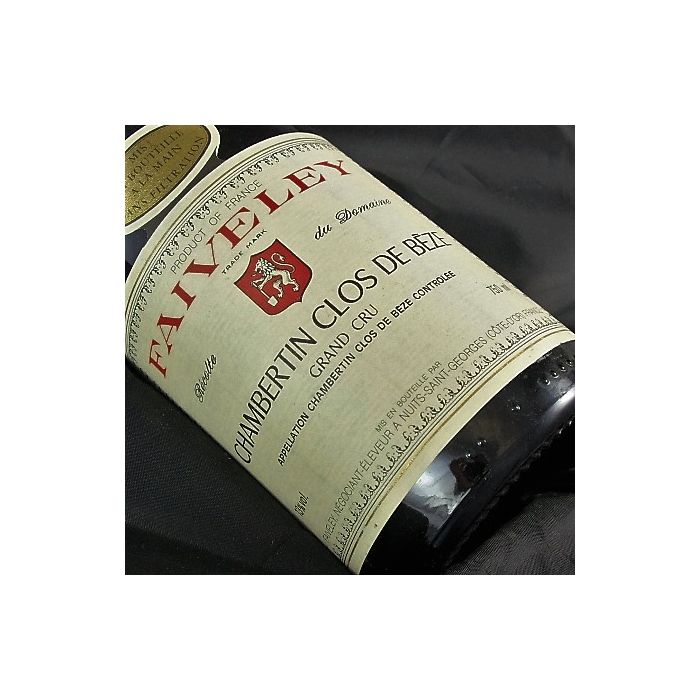
Domain Faiveley Chambertin Clos de Beze 2015 Magnum
The Domaine Faiveley Chambertin Clos de Bèze 2015 is a red Burgundy wine from the Chambertin-Clos-de-Bèze Grand Cru in Gevrey-Chambertin. Made exclusively from Pinot Noir, it comes from a 1.29-hectare vineyard spread across the lieux-dits Grands Rangs, Clos de Bèze Haut and Vieilles Vignes. The grapes from these parcels are vinified separately before blending. The estate associates this cru with scree soils rich in limestone, which contribute to its depth and complexity.
La bouteille proposée
- Size
- Magnum (150cl)
- Packaging
- Original Wooden Case of 1
- Label Condition
- Perfect
- Fill Level
- Perfect
- Capsule Condition
- Perfect
Identité du vin
- Couleur
- Red
- Pays
- France
- Région
- Bourgogne
- Appellation
- Gevrey Chambertin
- Producteur / Domaine
- Domaine Faiveley
- Parcelle / Cru
- Chambertin-Clos-de-Bèze
- Millésime
- 2015
Cépage et assemblage
- Grape Variety
- 100% Pinot Noir
Domaine Faiveley
Domaine Faiveley is a family-run estate established in Nuits-Saint-Georges since 1825. Run by Eve and Erwan Faiveley, representatives of the seventh generation, it cultivates over 120 hectares spread across the Côte de Nuits, the Côte de Beaune and the Côte Chalonnaise. Its vineyards include, in particular, plots classified as grands crus and premiers crus, as well as several monopoles.
- Owner
- Famille Faiveley
- Maître de chais
- Jérôme Flous
- Surface (ha)
- 120.00 ha
Histoire du domaine
Domaine Faiveley was founded in Nuits-Saint-Georges in 1825 by Pierre Faiveley, initially as a wine merchant’s firm. The family then gradually developed its own vineyard; in 1834, they acquired, notably, 1.5 hectares in the Porrets-Saint-Georges vineyard, now classified as a Nuits-Saint-Georges Premier Cru. Over the generations, the estate expanded its holdings in the Côte de Nuits, the Côte de Beaune and the Côte Chalonnaise. In 1934, Georges Faiveley and Camille Rodier founded the Confrérie des Chevaliers du Tastevin, against the backdrop of the wine industry crisis of the 1930s. Erwan Faiveley took over the management of the family estate in 2005, at the age of 25. Jérôme Flous joined the estate in 2007, taking charge of technical management and winemaking. Eve Faiveley joined her brother at the estate in 2014; together they represent the seventh generation of the family. The winemaking facilities in Mercurey and then in Nuits-Saint-Georges were renovated during the 2010s. The estate began converting its vineyards to organic farming in July 2022 and obtained organic certification in July 2025.
Chambertin-Clos-de-Bèze
Chambertin-Clos de Bèze is a physically delimited Grand Cru appellation whose parcel area corresponds exclusively to the "Clos de Bèze" lieu-dit in Gevrey-Chambertin. The terroir occupies an east-facing hillside, with piedmont plots at the heart of a small amphitheater. The shallow, well-draining, carbonated clay-limestone soils combine scree, clays, and red silts. They primarily overlie a Bajocian substratum of crinoidal limestone and marly levels.
- Vineyard commune
- Gevrey-Chambertin
- Origin of the vineyard name
- The name "Clos de Bèze" recalls the former wine estate of the Abbaye de Bèze, which owned the site as early as the 7th century; the term "clos" has survived despite the disappearance of its walls.
- Exposure
- Levant, generally east-facing
- Slope
- Piedmont, at the heart of a small amphitheater
- Soil
- Shallow, carbonated, and well-draining clay-limestone soils, with scree, clays, and red silts.
- Subsoil and geology
- Plateau of hard Bajocian crinoidal limestone, with marly levels; Bathonian towards the upper part.
Le domaine dans cette parcelle
- Estate holding in the vineyard (ha)
- 1.294000 ha
- Vineyard holding status
- Owner of three plots
- Indicative vine age
- Plantations in 1949, 1955, 1966, 1983 and 2018 across all three plots.
Histoire de la parcelle
Clos de Bèze has been known since the 7th century, and the BIVB dates its entry into history to 640 as a monastic property of the Abbaye de Bèze. It was transferred to the Chapter of Langres in the early 13th century, then remained in the hands of the canons until the French Revolution, when it was divided among multiple owners. The Chambertin-Clos de Bèze appellation d'origine contrôlée was recognized by the decree of July 31, 1937; its delimited parcel area corresponds exclusively to the lieu-dit Clos de Bèze.


