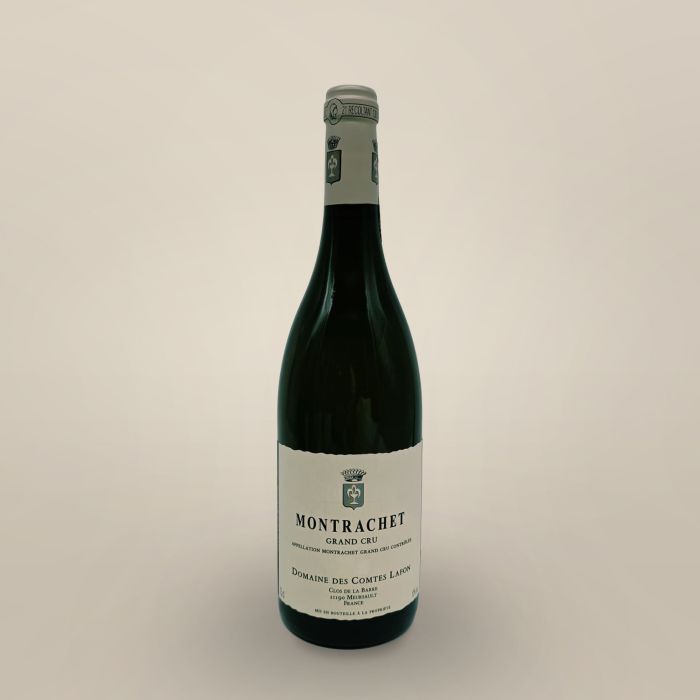
Montrachet is a physically delimited climat and Grand Cru appellation shared between Puligny-Montrachet and Chassagne-Montrachet. Its vines occupy a narrow, elongated strip, perpendicular to the slope, in a slight concavity in the lower part of the east- and southeast-facing hillside. The terroir combines red, clayey, calcareous, and very stony soils with Jurassic substrates differentiated by a fault. Its rapid drainage and nocturnal air drainage limit humidity and frost risks.
- Vineyard commune
- Puligny-Montrachet et Chassagne-Montrachet
- Origin of the vineyard name
- The name comes from "Mont Rachet," understood as "bald mountain" or "barren mountain," probably referring to the sparsely vegetated promontory overlooking the site; "râche" is a regional term designating ringworm or scurf.
- Exposure
- East to southeast
- Altitude
- 250–270 m
- Slope
- Lower part of the hillside; strip perpendicular to the slope
- Soil
- Red, clayey, calcareous, very stony, and well-structured soils; locally lean and very stoney soils.
- Subsoil and geology
- Fault separating two sectors; Oxfordian marls rich in iron oxides over Bajocian/Callovian flaggy limestones, with locally highly fragmented Bathonian limestones.
Le domaine dans cette parcelle
- Estate holding in the vineyard (ha)
- 0.320000 ha
- Year the vineyard was acquired
- 1918
- Vineyard holding status
- owner
- Indicative vine age
- 80% of the plot planted in 1953 and 20% in 1972.
Histoire de la parcelle
The cru is attested as early as the 13th century in the form "Mont Rachaz." It truly took off in the 18th century under the impetus of the Clermont-Montoison family, lords of Chagny, and Thomas Jefferson placed it on par with Chambertin in 1787. Puligny and Chassagne appended the name Montrachet to their village names in 1878. A Beaune court ruling defined the appellation of origin in 1921, and the Montrachet AOC was subsequently recognized on July 31, 1937.