




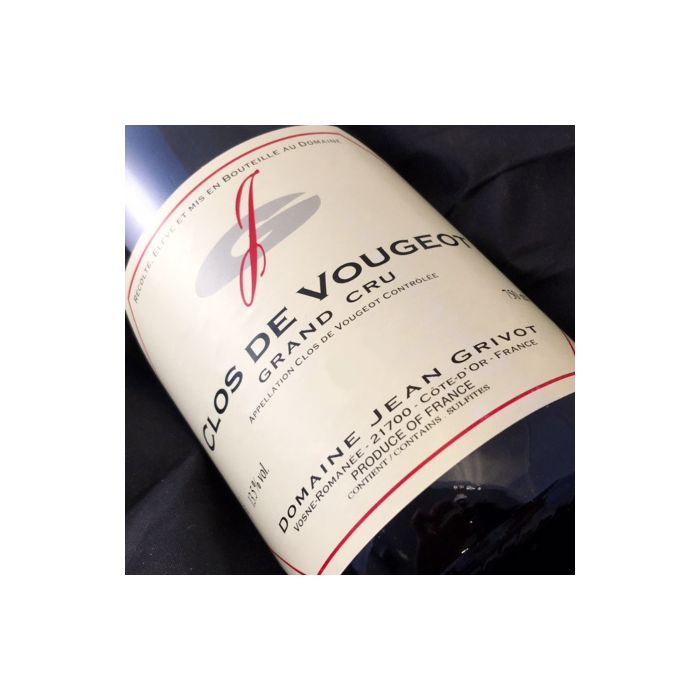
Domain Jean Grivot Clos Vougeot 1984
The 1984 Domaine Jean Grivot Clos Vougeot is a red Burgundy wine from the Clos de Vougeot parcel in the Vougeot appellation, classified as a Bourgogne Grand Cru. Crafted exclusively from Pinot Noir, it originates from a historic estate holding within the clos, acquired by Gaston Grivot in 1919. This cuvée comes from vines located between the heart of the vineyard and its lower wall, an origin that precisely distinguishes the expression of Domaine Jean Grivot in Clos de Vougeot.
Identité du vin
- Couleur
- Red
- Pays
- France
- Région
- Bourgogne
- Appellation
- Vougeot
- Producteur / Domaine
- Domaine Jean Grivot
- Parcelle / Cru
- Clos de Vougeot
Cépage et assemblage
- Grape Variety
- 100% Pinot Noir
Domaine Jean Grivot
Domaine Jean Grivot is a family-run estate based in Vosne-Romanée, in the Côte de Nuits. It cultivates vineyards spread across Vosne-Romanée, Nuits-Saint-Georges, Chambolle-Musigny and Vougeot, including plots in Clos de Vougeot, Échezeaux and Richebourg. Mathilde and Hubert Grivot represent the sixth generation of the family at the estate.
- Owner
- Famille Grivot
- Maître de chais
- Mathilde Grivot
- Surface (ha)
- 14.80 ha
- Production (average bottles per vintage)
- 75 000 bouteilles/an
Histoire du domaine
The Grivot family has been based in Vosne-Romanée for several generations. At the end of the 18th century, Joseph Grivot left Arcenant to settle in Burgundy, in Vosne-Romanée. The family’s wine-growing estate grew gradually throughout the 20th century. A plot in Clos de Vougeot was acquired in 1919 by Gaston Grivot. By the 1930s, the family was among the producers in Vosne-Romanée who bottled and marketed their own wines. Jean Grivot succeeded Gaston and expanded the estate by acquiring a plot of Richebourg in 1984. His son Étienne joined the business in 1982, then succeeded him in 1987 alongside his wife Marielle. Mathilde and Hubert Grivot in turn joined the family estate in 2010. Mathilde took charge of winemaking as part of the handover initiated by her parents, whilst she and Hubert now ensure the estate’s continuity within the family.
Clos de Vougeot
The Clos de Vougeot is a vast, single-piece vineyard enclosure, surrounded by walls and located at the foot of the Côte de Nuits slope, in the commune of Vougeot. Its terroir varies markedly from top to bottom: thin, gravelly soils on Bajocian limestone in the upper part, more clayey brown soils on limestone debris in the middle, and deeper, clayey and silty soils on a marly layer in the lower part. The site simultaneously constitutes a physically demarcated Burgundian climat and the emblematic parcel area of the AOC Grand Cru Clos de Vougeot or Clos Vougeot.
- Vineyard commune
- Vougeot
- Origin of the vineyard name
- "Clos" designates the vineyard historically enclosed by walls; "Vougeot" takes up the name of the place, linked to the Vouge which marks a historical boundary of the estate.
- Altitude
- 240–265 m
- Slope
- gentle, average of about 3.8%
- Soil
- At the top, shallow, granular soils rich in gravel; in the middle, shallow, more clayey brown soils on limestone debris; at the bottom, deeper brown soils rich in clay and fine silt.
- Subsoil and geology
- Jurassic complex; Bajocian limestone slab in the upper part, limestone debris in the middle, and marly layer in the lower part, with the influence of superficial formations linked to the outlet of the combe d'Orveau.
Le domaine dans cette parcelle
- Estate holding in the vineyard (ha)
- 1.860000 ha
- Year the vineyard was acquired
- 1919
- Vineyard holding status
- Family-owned estate; plot acquired by Gaston Grivot in 1919
- Indicative vine age
- Average vine age indicated as 40 years in the technical sheet for the 2018 Clos de Vougeot.
Histoire de la parcelle
The wine estate was gradually established by the Cistercian abbey of Cîteaux starting from the early 12th century; a medieval agreement set boundaries that have remained almost unchanged, and the wall was built before the end of that century. The farm buildings were developed from the 12th to the 15th century, then complemented in 1551 by the Renaissance residence that became the château du Clos de Vougeot. The abbey kept the estate until the Revolution; the buildings and vineyards were confiscated and then sold as national property in 1791, subsequently leading to the fragmentation of the property. The appellation d'origine contrôlée Clos de Vougeot or Clos Vougeot was recognized by decree on July 31, 1937.


