




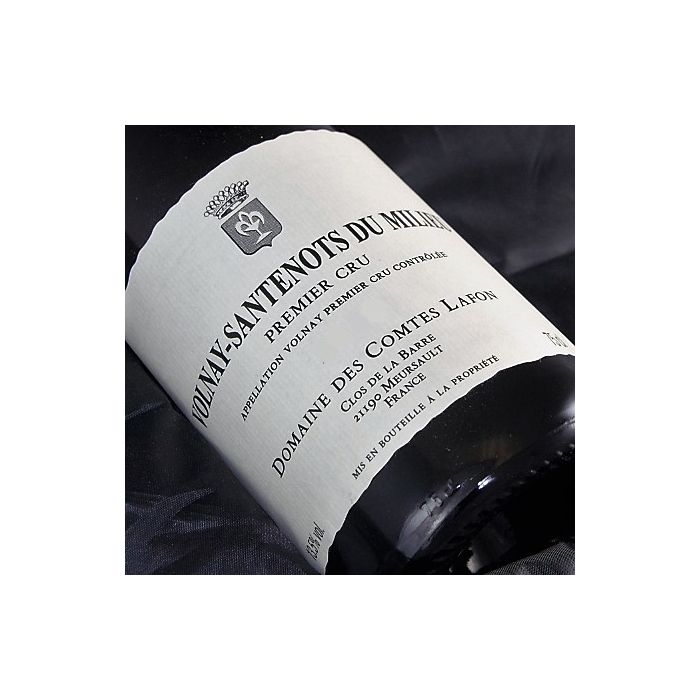
Domaine Comtes Lafon Volnay Santenots du Milieu 1990 Magnum (150cl) ETA CA
The Domaine des Comtes Lafon Volnay Santenots du Milieu 1990 is a red Burgundy wine from the Volnay appellation, crafted from 100% Pinot Noir in the Santenots parcel. The Wine Advocate awards it 94/100 and recommends drinking from 2013 to 2025. The publication describes an expressive bouquet dominated by black plum, raspberry, and orange, followed by a broad, sensual, and complete palate.
La bouteille proposée
- Size
- Magnum (150cl)
- Label Condition
- Highly Damaged
- Fill Level
- Perfect
- Capsule Condition
- Damaged Capsule
Identité du vin
- Couleur
- Red
- Pays
- France
- Région
- Bourgogne
- Appellation
- Volnay
- Producteur / Domaine
- Domaine des Comtes Lafon
- Parcelle / Cru
- Santenots (Volnay)
- Millésime
- 1990
Cépage et assemblage
- Grape Variety
- 100% Pinot Noir
Domaine des Comtes Lafon
The Domaine des Comtes Lafon is a family-run estate based in Meursault, in the heart of the Côte de Beaune. Its vineyards are spread across Meursault, Volnay, Monthélie and Chassagne-Montrachet, notably including plots in Meursault’s Premier Cru vineyards and Montrachet’s Grand Cru vineyard. The estate is currently run by Léa and Pierre Lafon, whilst Jérôme Delassus is listed as cellar master.
- Owner
- GFA du Domaine des Comtes Lafon (famille Lafon)
- Maître de chais
- Jérôme Delassus
Histoire du domaine
The estate’s history is linked to Jules Lafon, a native of Tarn-et-Garonne, who was transferred to Dijon in 1887 as part of his role at the Administration of Registration, Estates and Stamps. In 1894, he married Marie Boch, who came from a family of wine-growers and merchants in Meursault, marking the start of his involvement in the village’s wine industry. Having become a lawyer, Jules Lafon was granted the title of Papal Count in 1918, which would give the estate its name. He gradually acquired several Meursault Premier Crus, including Genevrières, Perrières and Charmes, as well as a plot in Montrachet in 1918. As mayor of Meursault, he played a part in reviving the Paulée de Meursault in 1923, before giving up his legal practice in 1931 to devote himself to the estate. Following his death in 1940 and that of his son Pierre in 1944, the estate – which was then largely run on a sharecropping basis – was on the verge of being sold. René Lafon took over the management in 1956, and the entire production has been bottled at the estate since 1961. Dominique Lafon succeeded his father in 1984 and gradually reclaimed the plots previously entrusted to sharecroppers, a process completed in 1993. Under his leadership, the estate adopted organic farming and then biodynamic practices between 1995 and 1998. Léa Lafon joined the estate in 2019 and Pierre Lafon in 2020; they now run the estate, with Jérôme Delassus as cellar master.
Santenots (Volnay)
Santenots is a collective climat located in the commune of Meursault, immediately south of Volnay. For red wines, it officially brings together Les Santenots Blancs, Les Plures, Les Santenots du Milieu, Les Santenots du Dessous, and part of Les Vignes Blanches, which can claim Volnay Premier Cru Santenots. This particularity explains why the name Volnay appears on wines from vines physically planted in Meursault. The general data of the appellation describe an escarpment facing mainly east, with Jurassic marly-limestone soils that vary according to topographical position, without making it possible to attribute them uniformly to the entire collective climat.
- Vineyard commune
- Meursault
- Origin of the vineyard name
- Two hypotheses are reported: the Latin "sentes", evoking briars or thorny bushes, or "sentu", meaning path, in reference to the tracks descending from Auxey-Duresses.
Histoire de la parcelle
Santenots was already regularly distinguished among the best climats of Volnay in 19th-century wine classifications. The AOC Volnay was recognized on September 9, 1937, and the list of climats authorized to bear the "premier cru" mention was established in 1943. The regulations consecrated the historical usage allowing the red wines of this sector of Meursault to claim Volnay-Santenots.


