


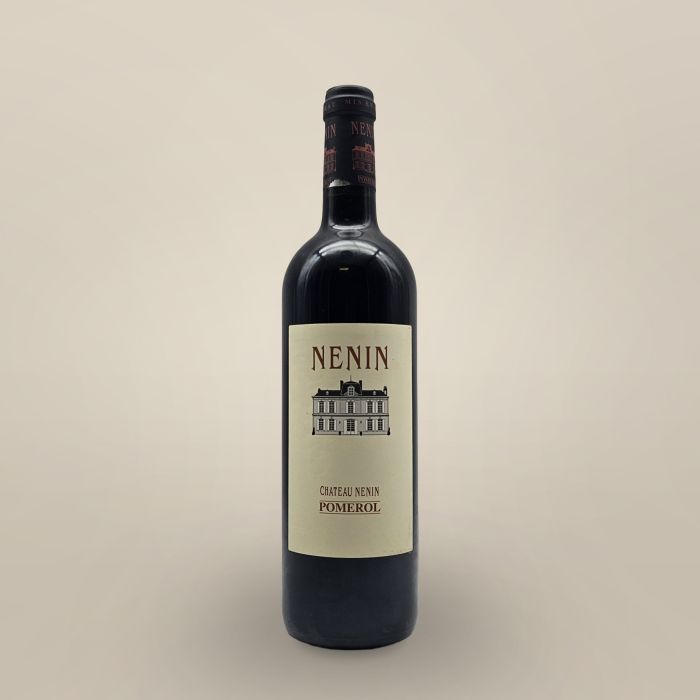
Château Nenin 2017 Bouteille (75cl)
Château Nénin 2017 is a red wine from Pomerol, Bordeaux, produced by Château Nénin. The grand vin comes from the estate's best parcels, established on the clay-gravel terroirs of the Pomerol plateau; the harvest took place from 12 to 29 September 2017. The Wine Advocate awards it 94/100 and places it within a drinking window of 2022 to 2045; Jancis Robinson rates it 16+/20, to be drunk from 2022 to 2032. James Suckling gives it 93/100 from 2021, while Wine Spectator scores it 92/100, to be enjoyed through 2032. Critics highlight a profile that is both dense and fresh, driven by black and red fruits, floral and spicy notes, a graphitic structure, and fine tannins, with a long, mineral finish.
stock: 6
€72.00
€60.00
En stock
6 bouteilles disponibles
Une question ? Notre équipe vous conseille sur WhatsApp
+33 1 39 70 60 70
The bottle offered
- Size
- Bottle (75cl)
- Packaging
- Loose
- Label Condition
- Perfect
- Fill Level
- Perfect
- Capsule Condition
- Perfect
Wine details
- Couleur
- Red
- Pays
- France
- Région
- Bordeaux
- Appellation
- Pomerol
- Producteur / Domaine
- Château Nénin
- Millésime
- 2017
Cépage et assemblage
- Grape Variety
- 78% Merlot, 21% Cabernet Franc, 1% Cabernet Sauvignon
Château Nénin
Château Nénin is a wine estate in the Pomerol appellation, situated to the north of the hamlet of Catusseau, on the southern slope of the plateau. Its 32-hectare vineyard, which forms a single block with the exception of one plot, comprises a mixture of clay and gravelly soils. It has been owned by Jean-Hubert Delon since 1997 and also produces the second wine, Fugue de Nénin.
- Owner
- Jean-Hubert Delon (famille Delon)
- Maître de chais
- Maxime Le Rumeur
- Surface (ha)
- 32.00 ha
- Production (average bottles per vintage)
- 60 000 bouteilles/an
Histoire du domaine
The origins of Château Nénin are generally traced back to the Demay family in the 18th century. The estate then passed into the hands of the Paillet family in the 19th century. The Despujol family took ownership in 1847. On the eve of the 1997 grape harvest, Jean-Hubert Delon bought the estate from his Despujol cousins. He then undertook a major restructuring of the vineyard and technical facilities. Pruning and trellising methods were revised, drainage works were carried out, and some vines were replanted or grubbed up. The ageing and storage cellars were extended and refurbished, whilst a new fermentation vat was built. The estate is now owned by Jean-Hubert Delon, who also owns Château Léoville Las Cases and Château Potensac.
Sell Your Wine Cellar
Vous possédez des bouteilles de Château Nenin 2017 Bouteille (75cl)
Vendez vos bouteilles au meilleur prix