




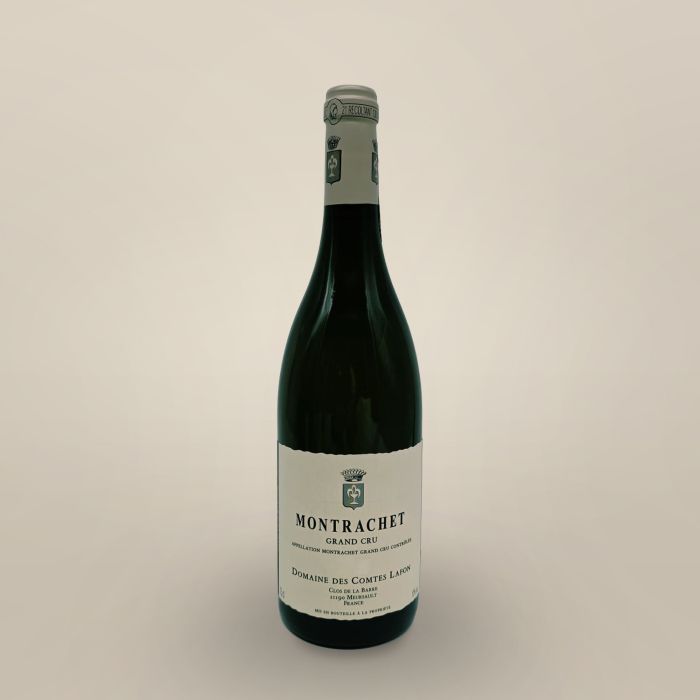
Domain Comtes Lafon Montrachet 1995 Bottle (75cl)
The 1995 Domaine des Comtes Lafon Montrachet is a white Burgundy wine from the Montrachet Grand Cru, crafted from 100% chardonnay. Coming from the Montrachet parcel, it received a score of 93-95/100 from The Wine Advocate. The publication describes an ample and structured wine, marked by mineral-driven fruit and great elegance, still tightly wound in its youth. Its indicated drinking window extends from 2003 to 2024.
La bouteille proposée
- Size
- Bottle (75cl)
- Packaging
- Loose
- Label Condition
- Perfect
- Fill Level
- Perfect
- Capsule Condition
- Perfect
Identité du vin
- Couleur
- White
- Pays
- France
- Région
- Bourgogne
- Appellation
- Puligny Montrachet
- Producteur / Domaine
- Domaine des Comtes Lafon
- Parcelle / Cru
- Montrachet
- Millésime
- 1995
Cépage et assemblage
- Grape Variety
- 100% Chardonnay
Domaine des Comtes Lafon
The Domaine des Comtes Lafon is a family-run estate based in Meursault, in the heart of the Côte de Beaune. Its vineyards are spread across Meursault, Volnay, Monthélie and Chassagne-Montrachet, notably including plots in Meursault’s Premier Cru vineyards and Montrachet’s Grand Cru vineyard. The estate is currently run by Léa and Pierre Lafon, whilst Jérôme Delassus is listed as cellar master.
- Owner
- GFA du Domaine des Comtes Lafon (famille Lafon)
- Maître de chais
- Jérôme Delassus
Histoire du domaine
The estate’s history is linked to Jules Lafon, a native of Tarn-et-Garonne, who was transferred to Dijon in 1887 as part of his role at the Administration of Registration, Estates and Stamps. In 1894, he married Marie Boch, who came from a family of wine-growers and merchants in Meursault, marking the start of his involvement in the village’s wine industry. Having become a lawyer, Jules Lafon was granted the title of Papal Count in 1918, which would give the estate its name. He gradually acquired several Meursault Premier Crus, including Genevrières, Perrières and Charmes, as well as a plot in Montrachet in 1918. As mayor of Meursault, he played a part in reviving the Paulée de Meursault in 1923, before giving up his legal practice in 1931 to devote himself to the estate. Following his death in 1940 and that of his son Pierre in 1944, the estate – which was then largely run on a sharecropping basis – was on the verge of being sold. René Lafon took over the management in 1956, and the entire production has been bottled at the estate since 1961. Dominique Lafon succeeded his father in 1984 and gradually reclaimed the plots previously entrusted to sharecroppers, a process completed in 1993. Under his leadership, the estate adopted organic farming and then biodynamic practices between 1995 and 1998. Léa Lafon joined the estate in 2019 and Pierre Lafon in 2020; they now run the estate, with Jérôme Delassus as cellar master.
Montrachet
Montrachet is a physically delimited climat and Grand Cru appellation shared between Puligny-Montrachet and Chassagne-Montrachet. Its vines occupy a narrow, elongated strip, perpendicular to the slope, in a slight concavity in the lower part of the east- and southeast-facing hillside. The terroir combines red, clayey, calcareous, and very stony soils with Jurassic substrates differentiated by a fault. Its rapid drainage and nocturnal air drainage limit humidity and frost risks.
- Vineyard commune
- Puligny-Montrachet et Chassagne-Montrachet
- Origin of the vineyard name
- The name comes from "Mont Rachet," understood as "bald mountain" or "barren mountain," probably referring to the sparsely vegetated promontory overlooking the site; "râche" is a regional term designating ringworm or scurf.
- Exposure
- East to southeast
- Altitude
- 250–270 m
- Slope
- Lower part of the hillside; strip perpendicular to the slope
- Soil
- Red, clayey, calcareous, very stony, and well-structured soils; locally lean and very stoney soils.
- Subsoil and geology
- Fault separating two sectors; Oxfordian marls rich in iron oxides over Bajocian/Callovian flaggy limestones, with locally highly fragmented Bathonian limestones.
Le domaine dans cette parcelle
- Estate holding in the vineyard (ha)
- 0.320000 ha
- Year the vineyard was acquired
- 1918
- Vineyard holding status
- owner
- Indicative vine age
- 80% of the plot planted in 1953 and 20% in 1972.
Histoire de la parcelle
The cru is attested as early as the 13th century in the form "Mont Rachaz." It truly took off in the 18th century under the impetus of the Clermont-Montoison family, lords of Chagny, and Thomas Jefferson placed it on par with Chambertin in 1787. Puligny and Chassagne appended the name Montrachet to their village names in 1878. A Beaune court ruling defined the appellation of origin in 1921, and the Montrachet AOC was subsequently recognized on July 31, 1937.


